Table of contents
Remember when teeth straightening meant surviving a two-year sentence of metal brackets, snapped wires, and a strictly enforced ban on popcorn? For a long time, that was the unavoidable rite of passage to a confident smile.
Today, the orthodontic landscape looks entirely different. Walking into a modern clinic, you are far more likely to be prescribed a series of clear, medical-grade plastic trays than a mouth full of metal. According to the American Association of Orthodontists, clear aligner therapy has become one of the most popular orthodontic treatment options for suitable cases.
But as their popularity continues to skyrocket, a fundamental question remains for anyone looking to invest their hard-earned money and time: is invisible aligners effective?
If you are trying to figure out whether these discreet trays can truly deliver a flawless smile, you are in the right place. Let’s break down how this technology works, explore the pros and cons and answer that pressing question once and for all.
How Clear Aligners Actually Shift Teeth
Before addressing if invisible aligners are effective, it helps to understand the science behind the magic. Clear aligner therapy does not just apply random pressure to your teeth. The entire process is grounded in advanced digital engineering and biomechanics.
When you see a dental professional, they use a specialized intraoral scanner to capture a highly precise 3D digital model of your mouth. Advanced AI-driven software then charts the optimal path for every single tooth, mapping out micro-movements from their current positions to their final destinations.
Based on this blueprint, a sequence of custom thermoplastic trays is manufactured. Each set of trays is engineered to apply strategic, low-intensity forces to specific teeth. You wear each set for about one to two weeks before moving on to the next one in the series, gradually guiding your teeth into place.
Is Invisible Aligners Effective? The Direct Answer
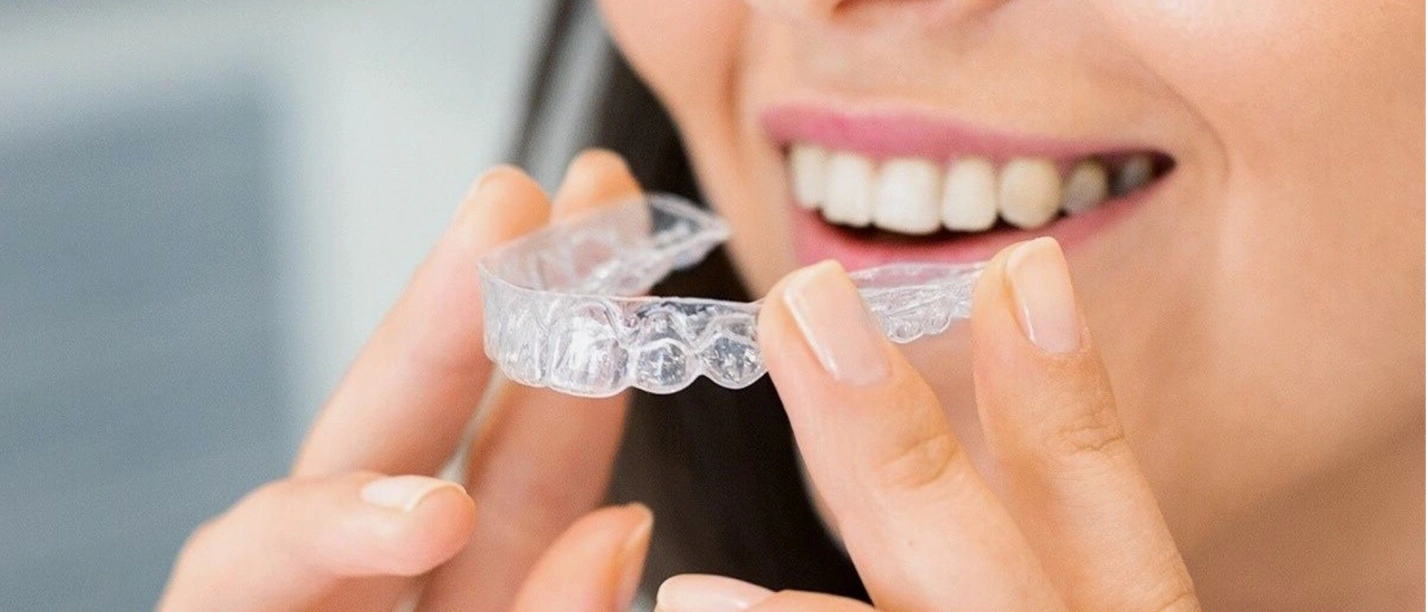
he short answer is yes. Extensive clinical data and millions of transformed smiles globally prove that clear aligners are highly efficient. However, the complete answer requires a bit more nuance: is invisible aligners effective for every single dental issue? Not quite.
Clear aligners excel at treating mild-to-moderate orthodontic concerns, including:
- Crowding: When there is not enough room in your jaw for your teeth to fit naturally.
- Spacing issues: Closing up frustrating gaps between teeth.
- Mild bite misalignments: Addressing minor overbites, underbites, and crossbites.
For these conditions, modern clear aligners are incredibly predictable. In fact, a landmark 2026 comparative clinical study published in the orthodontic space revealed that newer multi-layer aligner materials (like OrthoFX’s FXClear) can even achieve up to 25% faster treatment times and greater geometric precision than older plastic models.
That said, for severe structural skeletal issues or complex root rotations, traditional fixed braces remain the clinical gold standard.
The Pros of Invisible Aligners
There is a reason adult orthodontics has experienced a massive boom. The advantages of clear aligners extend far beyond just looking good.
Near-Invisible Esthetics
The most obvious benefit is discretion. Made from crystal-clear, thin polymers, these trays sit snugly against your teeth. Most people won’t even notice you are wearing them during a meeting, on a date, or in photos.
Zero Dietary Restrictions
With traditional braces, hard, sticky, or chewy foods are completely off the table. Because you remove your aligners before every meal, you can keep eating everything you love, from apples to corn on the cob, without the fear of breaking a bracket.
Superior Oral Hygiene
Cleaning around permanent metal wires and brackets is notorious for causing plaque buildup. Aligners completely eliminate this frustration. You simply pop them out, brush and floss your teeth normally, rinse the trays, and put them back in.
Enhanced Physical Comfort
While your teeth will feel some predictable pressure when you switch to a new tray, aligners are made of smooth plastic. You won’t have to deal with sharp metal brackets cutting into your cheeks or poking wires that require emergency clinic visits.
The Cons of Invisible Aligners
No orthodontic treatment is perfect. To fully understand if invisible aligners are effective for your lifestyle, you have to weigh the drawbacks.
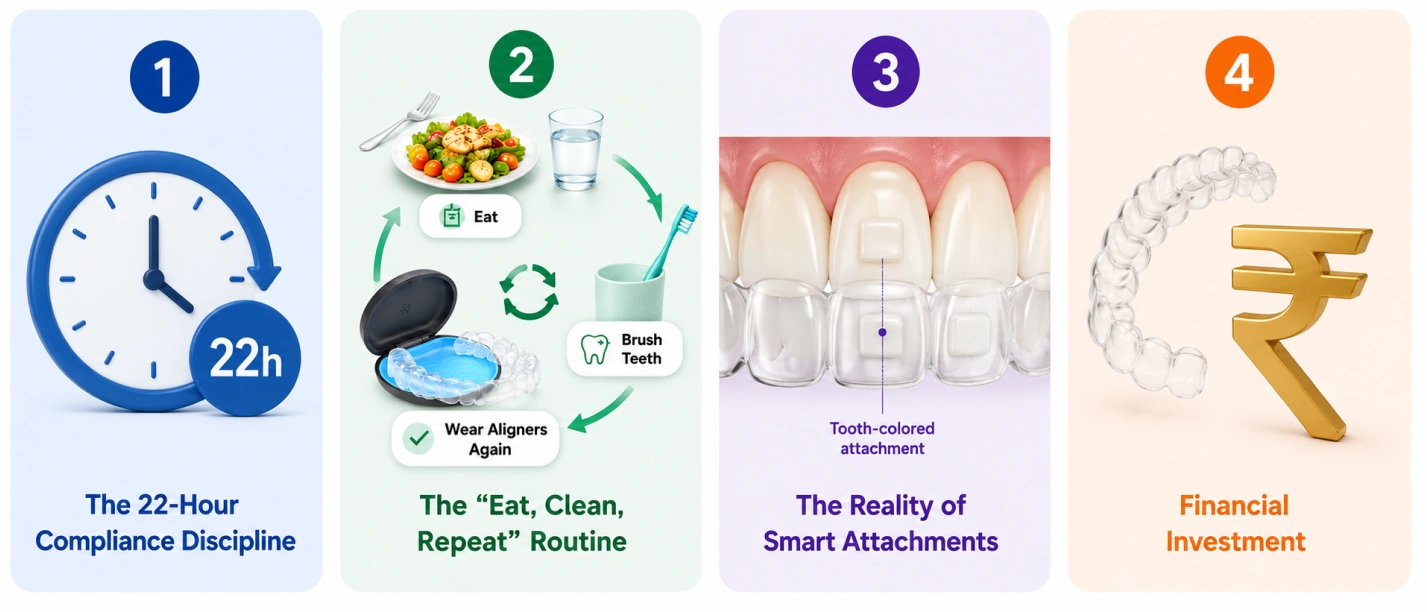
The 22-Hour Compliance Discipline
Because the trays are removable, the entire success of the treatment rests on your shoulders. For the trays to work efficiently, they must be kept in your mouth for 20 to 22 hours every single day. If you frequently forget to put them back in after eating, your treatment will quickly stall.
The “Eat, Clean, Repeat” Routine
Every time you consume food or a colored beverage (anything other than plain water), you must brush your teeth before putting the aligners back on. Failing to do so traps sugars and acids against your enamel, drastically increasing your risk of cavities and staining your clear trays.
The Reality of Smart Attachments
While the trays themselves are clear, many moderate plans require “attachments.” These are tiny, tooth-colored composite bumps bonded directly to your teeth to give the plastic grip for complex movements. While still subtle, they make the treatment slightly more visible.
Financial Investment
Depending on the complexity of your case, the cost of premium, doctor-supervised aligners typically ranges from $3,000 to $8,000. While comparable to traditional braces, it represents a significant upfront investment.
Expected Real-World Results and Timelines
When evaluating if invisible aligners are effective, tracking the timeline is crucial. For an average adult dealing with moderate crowding or gaps, a standard clear aligner treatment lasts between 12 to 18 months. Minor cosmetic adjustments can sometimes be wrapped up in as little as 6 months.
In-Clinic Doctor Supervised vs. At-Home DIY Aligners
As you research options, you will likely encounter direct-to-consumer “at-home” aligner brands that promise a straight smile via mail-order impression kits. It is vital to note that when dental professionals discuss how safely invisible aligners are effective, they are specifically referring to doctor-supervised treatments.
Moving teeth shifts the delicate bone structure of your face. Undergoing this process without in-person x-rays, comprehensive structural evaluations, and regular monitoring by a board-certified orthodontist carries real risks, including irreversible root damage or worsening your bite.
To explore safely, your first step should always be finding a trusted provider. You can check out reputable orthodontic clinics nearby to find certified specialists who can safely guide your smile transformation.
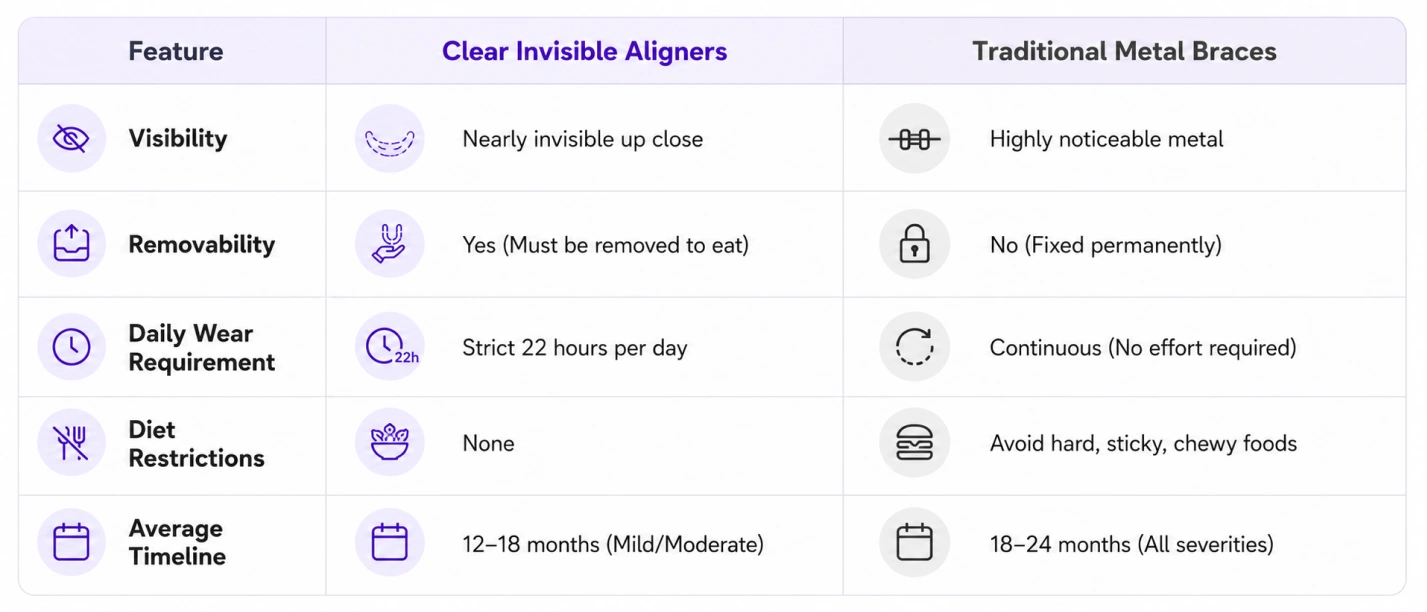
Summary Comparison: Clear Aligners vs. Metal Braces
To give you a quick glance at how these options stack up, let’s look at their core attributes side by side:
Final Verdict: Is Invisible Aligners Effective?
Ultimately, if you have mild-to-moderate teeth alignment issues and possess the self-discipline to wear the trays consistently, is invisible aligners effective is a settled question. It is an exceptionally reliable, highly aesthetic, and comfortable path to a healthier smile.
Ready to take the next step? At PowerSmiles we help you begin your smile transformation with confidence. Our experienced dental professionals use advanced digital scanning and personalised treatment planning to create clear aligner solutions tailored to your needs.
Schedule a consultation with us today to find out how invisible aligners can help you achieve a straighter, healthier smile with expert care every step of the way.
Frequently Asked Questions
You will experience a sensation of tight pressure and minor soreness for the first 24 to 48 hours after switching to a new set of trays. This is completely normal and simply means the aligners are doing their job moving your teeth. The discomfort is generally much milder than the pain caused by tightening metal braces.
No, you should only drink plain, room-temperature water while your aligners are in. Hot liquids can warp the specialized plastic, distorting their fit. Additionally, dark beverages like coffee, tea, and red wine will quickly stain both the trays and your teeth, leading to trapped bacteria and decay.
You may notice a very slight lisp for the first few days as your tongue adjusts to the thin layer of plastic over your teeth. This is temporary. As you talk, your brain and tongue quickly adapt, and your speech usually returns completely to normal within less than a week.
Yes. Just like with traditional braces, your teeth have a natural tendency to drift back to their old, crooked positions once active forces stop. To lock in your results permanently, you will need to wear a clear custom retainer at night according to your orthodontist’s instructions.
Yes, many top aligner brands feature specific lines designed for teenagers. These often include helpful visual compliance indicators (subtle blue dots that fade with consistent wear) to help parents and orthodontists ensure the teen is hitting their required 22-hour daily mark.